Monday, 16 April 2018

That and Which

The choice between that and which can be confounding, especially if you include British usage (spoiler: the Brits use which in places where Americans insist on that). But before we can dive into the famous that/which rule, I need to introduce you to restrictive and nonrestrictive clauses.

Illumination of man in bed with two dragons fighting above him. Paris, ca. 1400

Obligatory and Optional Phrases


A clause, phrase, or word is called restrictive when it’s necessary in order for the sentence to work. Take it out, and the sentence doesn’t convey the same thing.

  • Animals such as bears should be treated with caution.
  • People who jump queues should be strung up by their toes.
  • The dragons fighting above my bed are keeping me awake.

Notice the lack of commas in these examples. Restrictive phrases are never set off with commas.

A clause, phrase, or word is called nonrestrictive when it’s not necessary for the sentence. You could take it out without losing any essential information.

  • Hibernating animals, such as bears, should be treated with caution.
  • Villanelle, who jumps queues, should be strung up by her toes.
  • The castle’s pair of dragons, fighting above my bed, are keeping me awake.

Nonrestrictive phrases, unlike restrictive phrases, are set off with commas.

  • The Earl, however, refused to be seen in a Volkswagen.
  • The double-action shotgun, not diplomacy, was Anika’s forte.
  • The giant Madagascar hissing cockroach, I understand, makes an affectionate pet.

Because of this, adding or deleting commas can change the information in a sentence.

  • Her romance novel, Scottish Lords with Bulging Calf Muscles, is a bodice-ripper. 

Commas tell us the title is nonrestrictive: you could take it out and the sentence would say the same thing. Which means this is her only romance novel.

  • Her romance novel Scottish Lords with Bulging Calf Muscles is a bodice-ripper. 

The absence of commas tells us the title is restrictive: without it we wouldn’t know which romance novel was meant. Which suggests she has written other romance novels, some of which may feature other kinds of lords with different muscles.

Cover art for Temptation in a Kilt by Victoria Roberts

That said, the current preference among writers and editors seems to be for fewer commas, and as long as leaving out the commas isn’t likely to confuse the reader, then it’s acceptable to do so even with a nonrestrictive phrase. For example, if you leave out the commas around Myrna in my wife Myrna loves taxidermy, your readers probably won’t assume you have more than one wife.

On the other hand, if you’re writing about, say, siblings or offspring, you might want to use commas to show you only have one: our son, Xiaoping; my sister, Susan. (For more on this, see Commas, Names, and Chopsticks.)

That vs. Which


Understanding the difference between restrictive and nonrestrictive clauses is essential for choosing correctly between that and which. According to the that/which rule, that belongs in restrictive clauses and which belongs in nonrestrictive clauses.

  • The UFO that arrived last week is still parked on our lawn. (Not to be confused with the UFO that arrived the week before.) 
  • The UFO, which arrived last week, is still parked on our lawn. (Only one alien craft has ever landed here.)

In UK-style English, which is as likely to be used in a restrictive clause as that.

  • UK: The dark cloud which hung over the mansion put a pall on their croquet game.
  • US: The dark cloud that hung over the mansion put a pall on their croquet game.

But in any country, nonrestrictive clauses always use which.

  • UK & US: The corpse, which was oddly familiar, gave Teuta pause.

Illustration by Elenore Abbott for The Marsh King's Daughter by Hans Christian Andersen, 1922

Do You Need That That? 


The that in a restrictive clause can sometimes be left out if the meaning of the sentence is clear without it.

  • Desta told him that it was time.
  • Desta told him it was time.
  • If I had known that the plant was carnivorous, I wouldn’t have bought it.
  • If I had known the plant was carnivorous, I wouldn’t have bought it.
  • Hari realized that that was the witch’s plan all along.
  • Hari realized that was the witch’s plan all along.

Eliminating superfluous thats can make your writing cleaner and easier to read, which is why some editors insist on deleting the word wherever it turns up; however, there are places where a that is necessary for clarity.

  • I learned when she took her camera I was not to follow. 
  • I learned that when she took her camera I was not to follow. 
  • I learned when she took her camera that I was not to follow.

It’s good to question your thats, because we often overuse them without realizing it, but don’t assume any that is a bad that.

Photograph of woman with camera standing on high-rise construction beam, Berlin, 1910

In summary, use that when the clause is necessary to the sentence, and use which when it’s not. Unless you’re following UK style, in which case you can use which for necessary clauses too. But either way, when your clause is unnecessary, use which—and don’t forget the commas.


Follow me on Facebook.
Become a patron at patreon.com/grammarlandia and receive access to bonus content.

Sunday, 25 March 2018

Subjunctive Moodiness

When you write wish you were here, you’re using the subjunctive mood, as opposed to the indicative mood (you are here). The subjunctive is used in speculation and conjecture, for outcomes that are unlikely or even impossible.

If I Were You


In the subjunctive mood, verbs appear in the past tense.

  • Subjunctive: If I had a million dollars, I would buy a spaceship.
  • Indicative: If I have a filthy mouth, it is my grandma’s fault.

The first example uses the past tense to show the situation is purely hypothetical: I do not have a million dollars. The second example uses the present tense to show that I likely do have a filthy mouth (and that it’s my grandma’s fault).

Toulouse-Lautrec, La Loge au mascaron doré, 1895

An exception to this otherwise straightforward system is the verb to be. The subjunctive form of am and is isn’t was, as you’d expect, but were (if I were a rich man). Increasingly this use of were is being replaced by was, especially in informal contexts, but the two words can still have different implications.

  • If I were the murderer, where would I hide the body?
  • Even if I was the murderer, you have no proof!

The second example implies the speaker might actually have done it—though not as strongly as the present tense does: even if I am the murderer.

The Subjunctive in Past-Tense Narratives


This all may feel pretty instinctive, but when you’re writing a story in the past tense, the subjunctive can get confusing. Let’s start with a present-tense narrative.

  • Saru is standing at the edge of a ravine. He will make it if he jumps. (present tense means scenario is likely)
  • Saru is standing at the edge of a ravine. He would make it if he jumped. (past tense means scenario is hypothetical)

Now let’s shift to a past-tense narrative.

  • Saru was standing at the edge of a ravine. He could tell he would make it if he jumped. (simple past tense means scenario is likely)
  • Saru was captured at the edge of the ravine. He would have made it if he had jumped. (past-perfect tense means scenario is hypothetical)

The third example is looking ahead, predicting Saru’s success. The fourth is describing what didn’t happen; we understand Saru did not jump. In the past, the subjunctive mood is shown with the past-perfect tense (had jumped). For more on the past perfect see Using the Right Verb Tense.

Notice the second and third examples both use the same tense (he would make it if he jumped). You can use the simple past tense to talk about the hypothetical “now” or the likely “then.” This is what makes the subjunctive so confusing—your verbs can sound right and still be in the wrong tense.

  • If Gilda were a better person, she wouldn’t kill alien creatures.
  • If Gilda were a better person, she wouldn’t have killed those alien creatures.

These are both hypothetical scenarios (subjunctive mood) in the present. We’re arguing about Gilda’s morals, now, based on her past behaviour. Next we’ll shift to a past-tense narrative.

  • If Gilda was really a better person now, she wouldn’t kill the alien creatures.
  • If Gilda had been a better person, she wouldn’t have killed those alien creatures.

The first scenario is a real possibility: she hasn’t killed anyone yet, and she might not (indicative mood). The second is contrary to fact: she has killed and she is not a better person (subjunctive mood).

Cover of Planet Stories pulp magazine, featuring woman in armour swinging an axe at some alien tentacles

Can and Will, Could and Would


The verb will has popped up several times in this post. It’s a modal auxiliary verb, which just means it’s used a lot in the subjunctive mood (modal) and it’s often combined with other verbs (auxiliary), as in will buy and will make.

The past tense of will is would. This is why would is used in a present-tense narrative when speculating about something hypothetical (I know I would be a great leader). In a past-tense narrative, the subjunctive is shown by using would have + past participle—would have been, would have swung, would have jumped.

  • Taika will know the sigil if he sees it again. (present likely)
  • Taika would know the sigil if he saw it again. (present hypothetical)

  • Taika was sure he would know the sigil if he saw it again. (past likely)
  • Nothing looked familiar. Taika would’ve known the sigil if he’d seen it again. (past hypothetical)

Can (past tense could) is another modal auxiliary verb.

  • If Okoye can change, so can you. (present likely)
  • If Okoye could change, she would. (present hypothetical)

  • It showed that if Okoye could change, so could the rest of the Dora Milaje. (past likely)
  • If Okoye could have changed, she’d have done things differently. (past hypothetical)

Photo of Dahomey warriors, the all-female king's bodyguard from Benin, 1891

May and Might


May and might (also modal auxiliaries) can both be used in the present. The only difference is that might carries more uncertainty than may.

  • We may go ballooning tomorrow.
  • We might go ballooning tomorrow.

But only might should be used when you’re talking about a purely hypothetical scenario, especially one contrary to fact.

  • If it hadn’t rained, we might’ve gone ballooning.
  • If she were to ask me, I might spill the beans.

Generally speaking, you’ll want to use might rather than may in a past-tense narrative, unless the uncertainty is continuing into the narrative’s present.

  • Yihang’s ghost was seen walking the ramparts—and may haunt them to this day.
  • We never saw Talulla again. She may have joined the circus, but no one is sure.
  • They never saw Talulla again. She might have joined the circus, but no one was sure.
  • Vic passed out on the crafts table, so I think Felix may have spiked his tea.
  • Vic passed out on the crafts table, so I thought Felix might have spiked his tea.

Must and Had To


Finally, must is a modal auxiliary verb that’s used to show necessity (you must comply) or a conclusion (that must be the reason). In the sense of a conclusion, must can appear in either a present- or past-tense narrative.

  • That must be why Chidi’s so twitchy.
  • That must have been why Chidi was so twitchy.
  • Eleanor must have said something to upset him.

In the sense of necessity, must only works in the present; in a past narrative, use had to.

  • Wanda and Christiane must deliver the microfilm to the Resistance tonight.
  • Wanda and Christiane had to deliver the microfilm to the Resistance that night.

ID documents of WWII Resistance fighters Wanda and Christiane de Komornicka

More Examples


  • We were trapped, but if I could pick the lock, we’d be out of there in no time.
  • If I could have picked that lock, we’d have been out of there in no time, but I didn’t have a bobby pin.
  • Let me tell you, if I had a nickel for every time that dame lied to me, I’d be richer than Rockefeller.
  • Back then, if I’d had a nickel for every time that dame had lied to me, I’d’ve been richer than Rockefeller.
  • A wise man would have chosen his words carefully, but I blurted out the first thing that came into my head.
  • And I would’ve gotten away with it if it hadn’t been for you kids!


Become a Grammarlandia patron at patreon.com/grammarlandia and receive access to bonus content.

Friday, 2 March 2018

Using the Right Verb Tense

I’ve written before about choosing the right verb tense when writing characters’ thoughts. Today I’m going to talk about how to convey different times in your story’s past. Or in other words, when to use had.

Illustration of two butterflies with human heads drinking out of a champagne glass

Past and More Past


  • The butterflies drank all the champagne last night.
  • The butterflies had drunk all the champagne by the time we got there.

The verbs drank and got are both in the past (or simple past) tense, since they happened last night. Had drunk is in the past perfect tense to show it happened before the moment we got there last night.

  • I ran into Perseus in Starbucks. I had had my hair done that morning, so it was looking extra snaky.

  ran = past simple
  had had = past perfect (had + past participle)
  was looking = past progressive (was + present participle)

In this example, the first action (running into Perseus) took place at the time of the scene in Starbucks. The second action (having my hair done) took place earlier—that morning. The third action (looking snaky) happened at the same time as the first, but it’s a continuing action, something the snakes are in the midst of.

This is how the example would look if it took place in the present:

  • I run into Perseus in Starbucks. I had my hair done this morning, so it is looking extra snaky.

You can see the first action is happening now, the second happened earlier (before now), and the third is still happening (continuing now). For past narratives, we’ll call these times “then,” “before then,” and “continuing then.”

Verb tense table: present

Verb tense chart: past

  • I felt confident of victory because I bribed the judges. X
  • I felt confident of victory because I’d bribed the judges.  

  • I feel confident of victory because I’d bribed the judges. X
  • I feel confident of victory because I bribed the judges.
  • I feel confident of victory because I’ve bribed the judges.

In the last example, have bribed is called the present perfect tense. It’s formed with have or has plus a past participle and is used in present-tense narratives for two kinds of actions: those that started in the past and have continued till now (You’re late—I’ve waited all morning) or those that happened at an indefinite time in the past (You’ve cut your hair vs. You cut your hair yesterday).

Although there are exceptions (which I’ll discuss in a minute), the general rules in the charts above should help you keep your tenses straight.

  • Zorg had beamed up by the time we arrived.
  • By the time we arrive, Zorg has beamed up.

  • I was cycling through the Alps when I met Franz. 
  • I’m cycling my way through the Alps when I meet Franz.

  • I’ve been working at the gas station for six months and I haven’t seen a single UFO.
  • I’d been working at the gas station for six months and I hadn’t seen a single UFO. 

Illustration of 19th c. travellers from the Nordic Museum

When Not to Use the Past Perfect


Though the past perfect is useful to show you’ve taken a step back in your narrative’s timeline, it’s not always necessary, provided the sequence of events is clear to the reader.

Say your story starts Ruth was a sailor who owned a big boat—obviously, a past-tense narrative. Next you write She was born in Fogo. You could write She had been born in Fogo instead, but it sounds a bit awkward unless it’s followed by a more recent event (e.g., She had been born in Fogo before they paved the roads). And even then it’s not necessary; it’s obvious to readers Ruth’s birth happened before the narrative starts.

Next you write Her parents were bootleggers. Should it be Her parents had been bootleggers? Depends on the story. Had been implies her parents are either dead or retired—no longer legging boots, in any case. Were could be interpreted to mean the same thing, or that they’re still bootlegging when the story starts. If the context doesn’t make your meaning clear, you need to use the past perfect.

  • Ruth was a sailor who owned a big boat. She was born in Fogo. Her parents were bootleggers. (unclear)
  • Ruth was a sailor who owned a big boat. She was born in Fogo. Her parents were bootleggers until they retired. (clear)
  • Ruth was a sailor who owned a big boat. She was born in Fogo. Her parents had been bootleggers. (clear)

Sticklers may insist the second example should read Her parents had been bootleggers until they retired, but for most editors, where the sequence of events is clear, the choice of simple past or past perfect is a question of authorial style.

Roman mosaic of Medusa from the Archeological Museum of Sousse

Let’s leave Ruth and revisit Medusa’s scene, expanding it a little. First we’ll use a present-tense narrative.

  • I run into Perseus in Starbucks. I had my hair done this morning, so it’s looking extra snaky. The stylist fed each snake a live cricket. She said they seemed happy today. Perseus doesn’t look happy to see them.

Our two times are “now,” in the coffee shop (run, is looking, does), and “before now,” in the salon (had, fed, said, seemed). If we wanted to change this to a past-tense narrative, we could change every “before now” verb to past perfect, but that would give us a lot of hads.

  • I ran into Perseus in Starbucks. I’d had my hair done that morning, so it was looking extra snaky. The stylist had fed each snake a live cricket. She’d said they’d seemed happy today. Perseus didn’t look happy to see them.

This is not technically incorrect, but it reads awkwardly. There are several places where we could use the simple past instead without obscuring the sequence of events.

  • I ran into Perseus in Starbucks. I’d had my hair done that morning, so it was looking extra snaky. The stylist fed each snake a live cricket. She said they seemed happy today. Perseus didn’t look happy to see them.

Obviously the stylist is part of the “before then” we established with I’d had my hair done that morning, so using fed instead of had fed isn’t confusing (though you could use had fed if you wanted). The next sentence, She said they seemed happy today, sounds downright clumsy in the past perfect (She’d said they’d seemed happy today), so you’re much better off using the simple past. Some writers would even change I’d had my hair done to I had my hair done, on the grounds that that morning makes the action’s timing clear, but I feel the past perfect is useful there to signal a shift to the reader.

Authors often start a long flashback using the past perfect for the first couple of actions then change to simple past once the time has been established. This is necessary if they intend to jump back again within the flashback, taking the reader to “before before then” with the past perfect. Grammar Girl has an excellent post dissecting this method.

Narrative Effects


You have a lot of authorial wiggle room when it comes to choosing whether to use the past perfect, but be aware that your choice can subtly change your narrative.

  • The whole night was a disaster.
  • The whole night had been a disaster. 

These two examples each locate the reader in a different narrative space. The first is slightly more distant. It’s simply relating an event.

  • The whole night was a disaster. The champagne never arrived, the caterer quit, the yacht capsized, and Aziz had to swim to shore. 

The second example implies the protagonist is looking back from his current situation. It fixes the reader within the present scene.

  • The whole night had been a disaster. The champagne never arrived, the caterer quit, the yacht capsized, and Aziz had had to swim to shore. Now he was sitting on the beach, sopping wet and missing a sock.

The Raft of the Medusa by Théodore Géricault, 1818-19

Choosing which verb tense to use is a matter of balancing grammatical correctness with narrative flow—always, of course, prioritizing clarity for your readers.

Even after you’ve mastered the past perfect, the subjunctive mood (if I had a million dollars) can throw off your past-tense narrative. I’ll be covering the subjunctive in my next post. If I were you, I would stay tuned.


You can support this blog and access bonus content by subscribing to patreon.com/grammarlandia

Sunday, 28 January 2018

Me, Myself, and I

These three words often get confused and misused, usually when a writer is trying to sound formal.

1964 photo by Chris Ware of two London police officers watching actors in alien costumes cross the street

Just Between You and Me


If you want to seem fancy, you might write, for example, Keep this between you and I. But the correct wording is Keep this between you and me, so you’ve come across as clueless rather than classy. In grammar circles, this kind of overcompensation is called a hypercorrection.

I (the nominative case) is used for the subject of a sentence or clause. Me (the objective case) is used for the object of a verb, the object of a preposition, or the subject of an infinitive.

  • I am from out of town. (subject of sentence)
  • Those cops don’t worry me. (object of verb worry)
  • Nobody comes between me and Zorg. (object of preposition between)
  • Zorg asked me to lead the way. (subject of infinitive verb to lead)

These examples probably seem obvious. It’s when an and (or an or) is involved that people often trip themselves up. The easiest way to avoid mistakes is to try your sentence without the other person.

  • It would be a different matter for you or I.
  • It would be a different matter for I. X
  • It would be a different matter for you or me. 

  • Give the Princess of Zanzibar and I your fealty.
  • Give I your fealty. X
  • Give the Princess of Zanzibar and me your fealty. 

Portrait of the Princess of Zanzibar with her African Attendant by Walter Frier, 1731

I Made It Myself


Myself (the reflexive case) is used either as an intensifier or to show that the action is reflecting back onto the actor.

As an intensifier, myself appears in sentences like I myself don’t dance and I crocheted it myself. You could take out myself and the sentence would still make sense; it’s just there to add emphasis.

The second, reflecting use occurs in sentences like I embarrassed myself. Here, the verb’s subject and its object—the one who embarrasses and the one who gets embarrassed—are the same person.

Again, it’s the ands and ors that throw people off. You can use the same method as above to see whether your sentence needs a reflexive pronoun.

  • I signed my roommate and myself up for Underwater Basket-Weaving 101.
  • I signed myself up for Underwater Basket-Weaving 101. 
  • I signed my roommate and myself up for Underwater Basket-Weaving 101. 

  • Send the kryptonite to my neighbour or myself.
  • Send the kryptonite to myself. X
  • Send the kryptonite to my neighbour or me. 

Don’t be tempted to use myself as a subject. That’s not its job.

  • The saucer’s crew and myself thank you.
  • Myself thank you. X
  • The saucer’s crew and I thank you. 

Even when the subject of the sentence is I, the next pronoun isn’t necessarily myself. Remember, the instigator of the action and the recipient of the action have to be the same person.

  • I called a flying fish to carry my wife and myself home.
  • I called a flying fish to carry myself home. X

Myself is the object of the verb to carry. Even though I is the subject of the sentence, the subject of to carry is fish—it’s the fish who’s going to carry me. Because the fish and I are not the same person, this sentence does not take a reflexive pronoun.

  • I called a flying fish to carry me home. 
  • I called a flying fish to carry my wife and me home. 

Detail from The Temptation of Saint Anthony by Hieronymus Bosch

On Behalf of Me and Myself


Sentences with on behalf of are hard to get right because rephrasing them doesn’t help: you wouldn’t say on behalf of me or on behalf of myself, you’d say on my behalf.

  • Thank you on behalf of the coven and myself.

Myself is the indirect object of the verb thank. The implied subject of thank (i.e., the thanker) is I—as in, I thank you. So the final pronoun is reflexive.

  • The Big Man speaks on behalf of the other Feegles and me.

Here, the subject of speaks, the Big Man, is not the same as its indirect object, me. So we don’t need a reflexive pronoun.

If it helps, you can replace the prepositional phrase on behalf of with the preposition for.

  • I thank you for [the coven and] me. X
  • I thank you for [the coven and] myself. 
  • The Big Man speaks for [the other Feegles and] myself. X
  • The Big Man speaks for [the other Feegles and] me. 

It Is I


One of the more obscure sources of I-versus-me confusion is predicate nominatives: pronouns that follow linking verbs like be, seem, look, or feel. The best-known example is probably when a caller says, “May I speak to the lady of the house?” and you answer, “This is she.”

Of course, you probably don’t answer “This is she,” because few people follow this rule anymore. Saying “It’s me” is far more common than saying “It is I,” which sounds ridiculously pompous and old-fashioned. (A best-selling grammar book pokes fun at this with the tongue-in-cheek title Woe Is I.) Using the nominative case (I, he, she, we, they) after is or was is technically correct but socially awkward. Even the most formal readers are unlikely to fault you for ignoring this rule.

Illustration by Edmund Dulac for Sleeping Beauty, 1910

So Why Should I Care?


In spoken English these mistakes are common, even accepted. You could argue that in casual writing there’s no need to be so persnickety. But consider this scenario: your narrator is a down-to-earth gal who doesn’t give a damn about grammar—who gets hired by the Duke of Lahdidah to find his missing son. If, in trying to make your Duke sound hoity-toity, you pepper his speech with between you and I and the Duchess and myself welcome you, you’re going to ruin the illusion for any readers who pay attention to grammar (and believe me, we’re out there). On the other hand, if you want to convey that a character is trying hard to sound posh but hasn’t had a rigorous education or an elitist upbringing, hypercorrection is the perfect tool.


Support Grammarlandia by becoming a patron at patreon.com/grammarlandia, and get access to exclusive posts.


Wednesday, 3 January 2018

Dangling Modifiers


A dangling (or misplaced) modifier can cause confusion and, often, unintentional hilarity. It’s a word or phrase that’s supposed to describe one thing but, because of how its sentence is written, actually describes something else—often in a way that’s ridiculous, impossible, or absurd.

Harold Lloyd hanging from clock

How to Spot a Dangler


By the rules of English grammar, a descriptive word or group of words (a modifying phrase) always refers to the closest noun or pronoun.

  • Glowing and beeping, we stared up at the alien craft in awe.

The pronoun closest to the modifying phrase glowing and beeping is we. No matter what its writer’s intention may have been, this sentence says we were the ones glowing and beeping, not the alien craft.

How to Un-dangle a Dangler


To fix the last example, we need to rearrange the sentence so the word being described is close to the phrase describing it.

Glowing and beeping, the alien craft hovered while we stared up at it in awe.


X
Upon entering the crypt, my hair stood on end.

Technically, upon entering the crypt describes hair, which admittedly did enter the crypt but presumably not under its own steam. What did enter the crypt was the speaker, who needs to be added to the sentence.

Upon entering the crypt, I felt my hair stand on end.


X
Working in her underwater lair, Dr. Megatroid’s sinister plans soon bore fruit.

Don’t let possessives confuse you. In this sentence it’s not Dr. Megatroid but her plans that are working.

Working in her underwater lair, Dr. Megatroid soon saw her sinister plans bear fruit.


X
A consummate high-wire artist, he assumed her wobbles were feigned—until she plummeted to the floor amid gasps from the audience.

Who is the high-wire artist, the man or the woman? As the sentence is written, it’s the man.

Knowing she was a consummate high-wire artist, he assumed her wobbles were feigned—until she plummeted to the floor amid gasps from the audience.

Now the modifying phrase does describe the closest pronoun, he.

Because she was a consummate high-wire artist, he assumed her wobbles were feigned—until she plummeted to the floor amid gasps from the audience.

Here the modifying phrase has been changed to a subordinate clause.


X
Having mastered the tango and the two-step, learning the electric slide was his next goal.

What does having mastered the tango and the two-step describe here? It describes learning the electric slide, which of course makes no sense. (Learning the electric slide is a gerund phrase, which means it acts as a noun.) The unstated he needs to be added, or the modifying phrase needs to be changed to a subordinate clause.

Having mastered the tango and the two-step, he set learning the electric slide as his next goal.
Since he had mastered the tango and the two-step, learning the electric slide was his next goal.

Early 19th-century illustration of dancers


X
Shaking off her trance, the spirits were scattered in every direction.
Shaking off her trance, she scattered the spirits in every direction.

X
Donning his superhero mask, a sense of his own silliness came over him.
Donning his superhero mask, he was overcome by a sense of his own silliness.
While he was donning his superhero mask, a sense of his own silliness came over him.

Hard-to-Spot Danglers


As in the previous examples, danglers are usually found at the beginning of sentences; however, like Bolshevik spies, they may be lurking anywhere.

X
Providing enough exercise can be a challenge for owners of dogs with small apartments.

Dogs do not, as of this writing, rent apartments, small or otherwise.

Providing enough exercise can be a challenge for dog owners with small apartments.

Participial Prepositions


Sometimes a word or phrase can modify an entire sentence rather than a single noun or pronoun. These participial prepositions—phrases that start with words like assuming, based on, depending, given, including, owing to, and provided—have built-in gravity boots: they never dangle.

Regarding the proposed orgy, it was generally felt that dim lighting would be best for all concerned.
Concerning his wayward daughter who had run off with a fallen seraph, he would only put a hand over his eyes and mutter about feathers.
Barring unusual weather, the balloon should reach Abyssinia by Thursday.

Illustration of early balloonists

Your intentions as a writer may seem obvious to you, but that doesn’t mean they’re obvious to your readers, who may become confused by dangling modifiers or, worse, laugh at them.


Support this blog at patreon.com/grammarlandia and get access to patron-only content.

Friday, 22 December 2017

Directional Insanity

Should you write backward and forward or backwards and forwards? Which directional word you choose depends on where you live and on whether you’re looking for an adverb or an adjective.

Compass roses from 18th century book by Katip Celebi

Toward/s


In the US most people use toward, while in the UK, Australia, and New Zealand most use towards. In Canada toward has the edge (see Canadian Oxford Dictionary), but towards isn’t unheard of (see Collins Canadian Dictionary). Really, you’re free to use whichever you like, as neither is incorrect. But be consistent—don’t flip-flop between them in the same document or you’ll look confused.

The other directional words are more complicated, because sometimes the s means the difference between an adverb and an adjective. (Quick reminder: adjectives modify nouns; adverbs modify everything else.)

Backward/s


Backwards is an adverb. Backward is an adjective. (Usually. See below.)

  • Looking backwards is the easiest way to turn into a pillar of salt. (adverb: modifies looking)
  • Guillermo ruined his dramatic exit with a backward look. (adjective: modifies look)

In addition to its directional meaning, backward as an adjective can also mean “shy or reluctant” or “underdeveloped or inferior.”

  • Shazia was not backward in showing off her scars.
  • It was a tiny, backward village, without running water or universal healthcare.

However, if you’re American, backward may sound fine to you as an adverb (falling backward). Merriam-Webster and The American Heritage Dictionary prefer backward for both adverb and adjective. According to Separated by a Common Language, more Americans use backwards than backward as an adverb, but obviously there’s room for debate.

To recap: For Brits and Canadians (and Australians and Kiwis), use backwards as an adverb and backward as an adjective. For Americans, feel free to use backward for both if you prefer.

Understand that this advice is based on which usage is most widely accepted; it’s not a lexicographic prescription from on high. If you feel strongly about that s one way or the other, follow your heart. But don’t add the s to your adjectives: most people would consider a backwards glance incorrect.

  • Cleopatra expected the staff to lean over backwards for her. (UK, Canada, etc.)
  • I won’t bend over backward for stingy tips. (US only)
  • Eudora left Earth’s orbit without a backward glance. (everyone)

Book cover: A Plunge into Space, 1890

Forward/s


Unsurprisingly, most Americans use forward as both adverb and adjective, a choice that’s supported by Merriam-Webster and American Heritage. Contrary to their s-loving trend, so do most people in the UK, though forwards seems to be the more common choice in the expression backwards and forwards.

As an adjective forward can also mean “bold or presumptuous,” “eager,” or “pertaining to the future.”

  • It was most forward of Hanz to seize your hand during tea.
  • The professor is forward-thinking in her approach.

It should be noted that some people make a distinction between forward and forwards as adverbs. The Oxford English Dictionary says forwards “expresses a definite direction”: a wheel moves forwards and text reads forwards, but we go forward, bring a matter forward, and look forward in time. The Canadian Oxford Dictionary also prefers forwards for the literal direction (backwards and forwards) and forward for expressions like come forward, send forward, move forward with, and from this time forward.

  • I look forward to it.
  • Even looking forwards I still feel carsick.
  • Step forward to volunteer.
  • Step forwards twice then spin around.

Five Positions of Dancing, Wilson, 1811

Other -Wards


The other directional words follow the same pattern, with US dictionaries preferring upward, downward, inward, outward, and onward and UK dictionaries leaning towards upwards, downwards, inwards, outwards, and onwards. (For adverbs, that is; the adjective forms are always without an s.)

  • The pigeon-toed geneticist always pointed her feet inward. (US)
  • Tenniel’s lobster points his toes outwards. (UK)
  • Mrs. Gupta’s ferocity belied her outward appearance. (both)

As with toward/s, Canadians generally follow the US in this, and Australians and Kiwis generally follow the UK. But there’s so much variation, you won’t confuse readers if you decide to add or drop the s from your adverbs. Just remember, if you want to look competent and professional, (say it with me) be consistent!

Tenniel illustration of lobster from Alice's Adventures in Wonderland

You can support this blog in any direction you like by becoming a patron at patreon.com/grammarlandia. Next months patron-only bonus post will be on clamber vs. clamour.


Friday, 24 November 2017

When to Use “Said”

There’s a myth that you should never use the verb say in your dialogue. Certainly there are more exciting, muscular verbs out there, but too often writers resort to a thesaurus when a simple said would be more effective.

Medieval
Cefusa, a legendary beast which leaves human footprints. France c.1290

Compare the following:

  “Are you sure this is where you saw it?” wondered Shazad.
  “Yes, I told you. It’ll pass by any minute, trust me,” replied Mae.
  “It’s not that I don’t believe you. It’s just that this branch has been poking me in the butt for like twenty minutes now,” complained Shazad.
  “Wait! I hear something!” observed Mae.

  “Are you sure this is where you saw it?” said Shazad.
  “Yes, I told you. It’ll pass by any minute, trust me,” said Mae.
  “It’s not that I don’t believe you. It’s just that this branch has been poking me in the butt for like twenty minutes now,” said Shazad.
  “Wait! I hear something!” said Mae.

While neither example is ideal, the speech tags in the second example are less distracting than those in the first. Said has a way of fading into the background, while verbs like replied and observed can sound odd or stilted. You want your reader’s attention to move smoothly through the scene, not get snagged on awkward or unnecessary word choices.

Of course, that doesn’t mean you should always and only use said. Other verbs can be more effective when they tell us something important about the dialogue.

  “Are you sure this is where you saw it?” whispered Shazad.
  “Wait! I hear something!” hissed Mae.

Here both speech tags expand on the dialogue by telling us how it was spoken. And both are in keeping with the scene, not shoehorned in just to provide word variety.

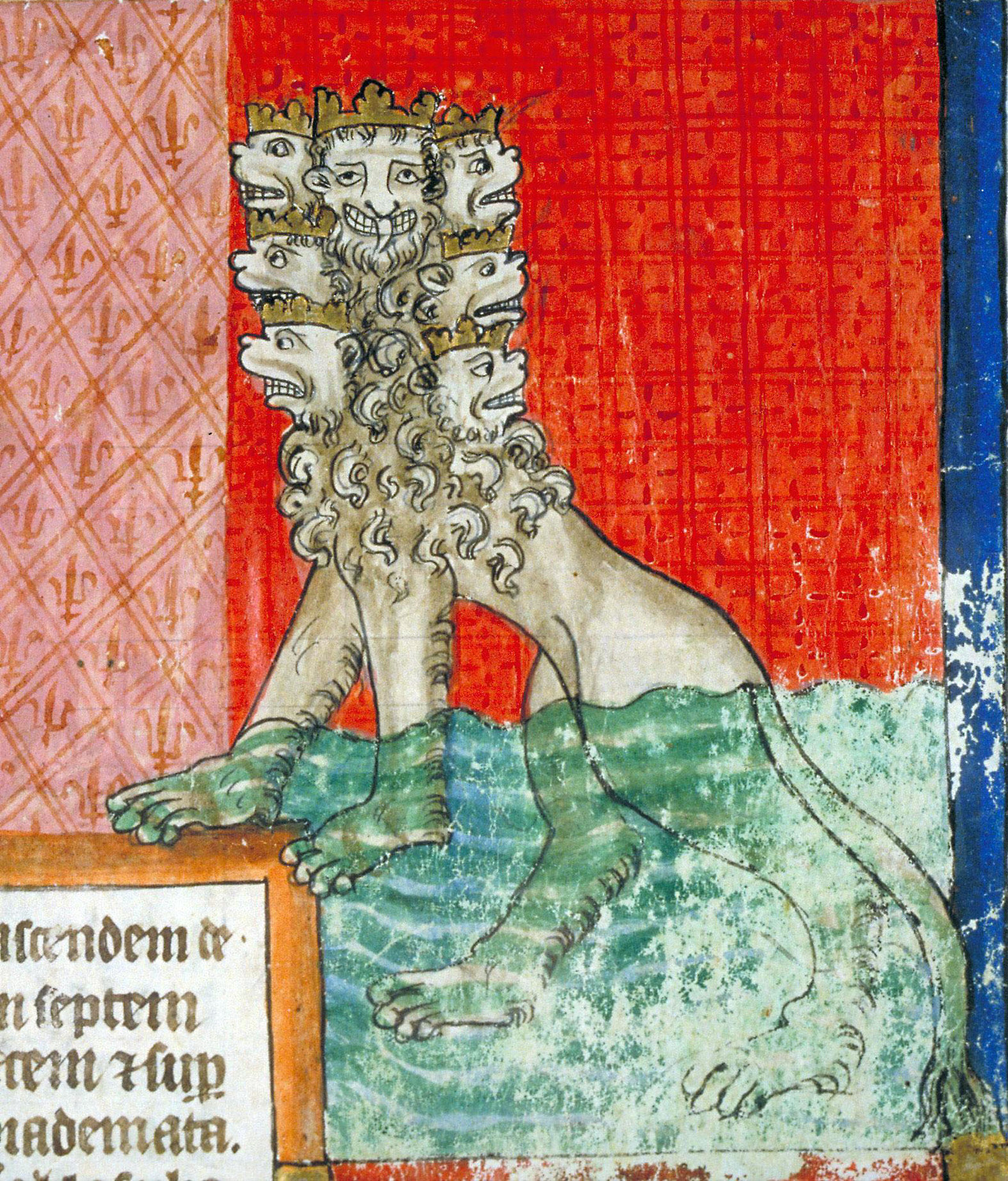
Medieval illumination of many-headed lion-type thing
Apocalypse beast. France 1220–1270

Of course, you could always dispense with speech tags altogether.

  “Are you sure this is where you saw it?”
  “Yes, I told you. It’ll pass by any minute, trust me.”
  “It’s not that I don’t believe you. It’s just that this branch has been poking me in the butt for like twenty minutes now.”
  “Wait! I hear something!”

This can work well where you want a quick pace. But unless you’ve already introduced the characters, the reader won’t be able to picture them. And if you add a third speaker, things get really confusing.

  “Is that it?”
  “Shh!”
  “Oh my God, you were right! It’s really real!”
  “Excuse me. Do you mind giving me a little privacy?”
  “Oh, uh, sorry.”
  “Yeah, sorry, dude.”

You can still let your readers know who’s speaking without using speech tags. The characters’ actions, appearing on the same lines as their dialogue, cue readers as to who’s saying what. (For more on this, see Dialogue and Paragraph Breaks.)

  Shazad leaned forward. “Is that it?”
  “Shh!” Mae poked his shoulder warningly.
  His jaw dropped. “Oh my God, you were right! It’s really real!”
  The sasquatch glared at them through the tree branches. “Excuse me. Do you mind giving me a little privacy?”
  Shazad cleared his throat. “Oh, uh, sorry.”
  Mae winced. “Yeah, sorry, dude.”

This method keeps some of the punchiness of the dialogue-only approach while giving the reader more information. The scene is a lot more vivid when we know how the characters are moving and reacting in between speaking.

Cute illustration of two sasquatches
Sasquatch and her son by Sarah Goodreau

But any sentence structure repeated too often will bore your reader, so you want to use some or all of these methods in combination. Remember, too, that you can put speech tags or actions in the middle of dialogue to switch things up.

  “Are you sure this is where you saw it?” whispered Shazad.
  “Yes, I told you,” said Mae. “It’ll pass by any minute, trust me.”
  “It’s not that I don’t believe you.” He shifted awkwardly. “It’s just that this branch has been poking me in the butt for like twenty minutes now.”
  Mae froze. “Wait! I hear something!”
  “Is that it?”
  “Shh!” she hissed.
  His jaw dropped. “Oh my God, you were right! It’s really real!”
  The sasquatch glared at them through the tree branches. “Excuse me,” she rumbled. “Do you mind giving me a little privacy?”
  “Oh, uh, sorry,” said Shazad.
  Mae winced. “Yeah, sorry, dude.”

What we can learn from the “never use said” myth is that no writing rule should be applied universally. A screwdriver may be an invaluable tool, but you wouldn’t use it to hang a picture. Writing tips are tools, and choosing the right one for each job is what the craft of writing is all about. Next time you’re enjoying a good book, notice how the author has put together their dialogue. I’m guessing somewhere in there they probably used said.


You can support this blog by becoming a patron. Those who pledge $5 or more a month get access to special bonus posts. Next month’s bonus post will be on faze vs. phase.